

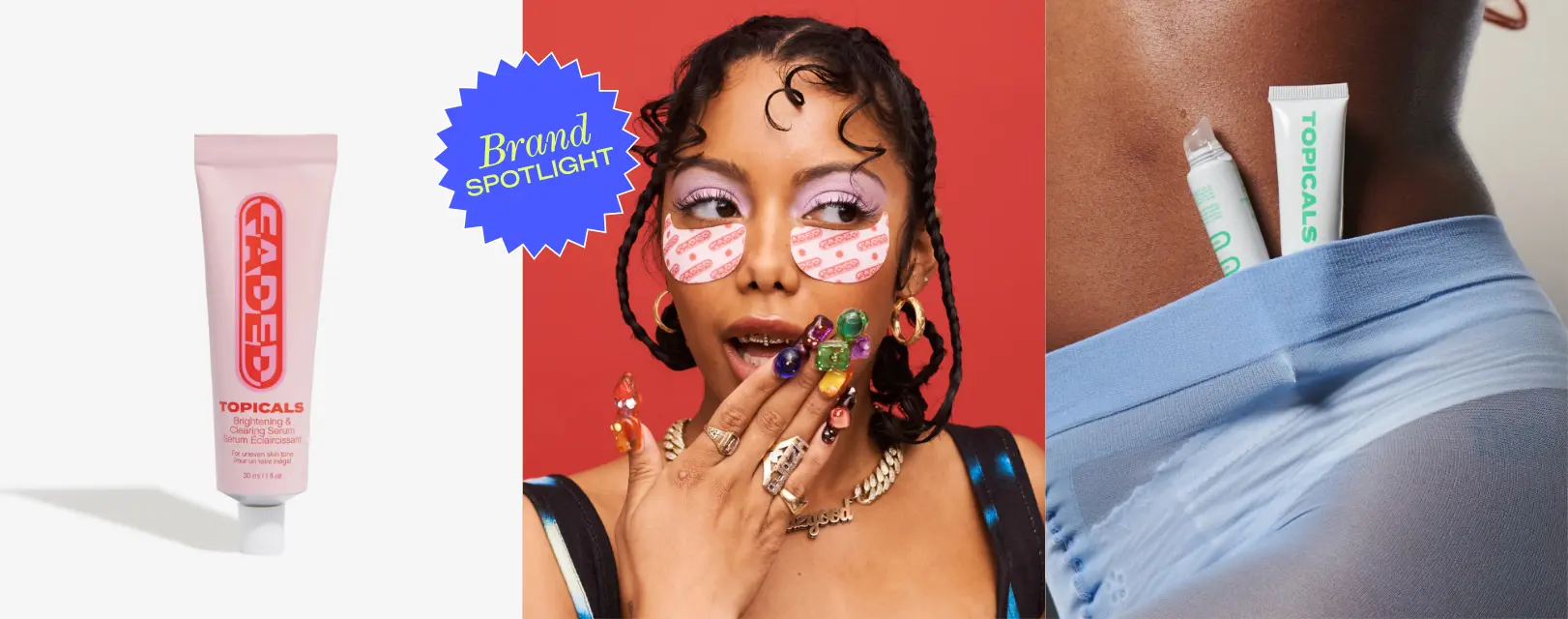
The brand that stopped treating your flare-up like something to apologize for.
I spent most of my twenties buying skincare that spoke to me like a problem. Clinical white bottles, words like corrective and blemish control, packaging designed to hide in a bathroom cabinet. The message was consistent: fix this, quietly.
Then Topicals showed up in hot pink with a tee that says Stop Staring at My Zits, and something clicked.
This Topicals review covers what the brand actually does well, where it falls short, and how long the results really take, because the answer to that last question is longer than the internet implies. I've used both Faded and Like Butter and I'd buy them again. I'll also tell you exactly what I'd steer away from.
What is Topicals, and who is it actually for?
Topicals makes science-backed skincare for chronic skin conditions: hyperpigmentation, eczema, acne, ingrowns, keratosis pilaris. The stuff that doesn't clear up in a week because it isn't supposed to. Their line is "skincare for flare-ups," and the brand's whole posture is that a flare-up is a thing you live with, not a personal failure.
Founder Olamide Olowe built it starting with $1,000 and went on to become the youngest Black woman to raise more than $10 million in venture funding. According to Essence, it's grown into Sephora's fastest-growing skincare brand, and Olowe has pledged to educate 10,000 estheticians and dermatologists on treating skin of color. She told the magazine something that explains the entire brand better than any product page could: "I have never actually thought about Topicals as a skincare brand."
That's the energy. The formulas are genuinely well-built, and the marketing treats your skin as part of your personality rather than a flaw in it.
So it's for you if you have a long-running skin condition and you're tired of being sold shame. It's not for you if you want overnight fixes.
Standout Products
[box-b: faded-brightening-clearing-serum]
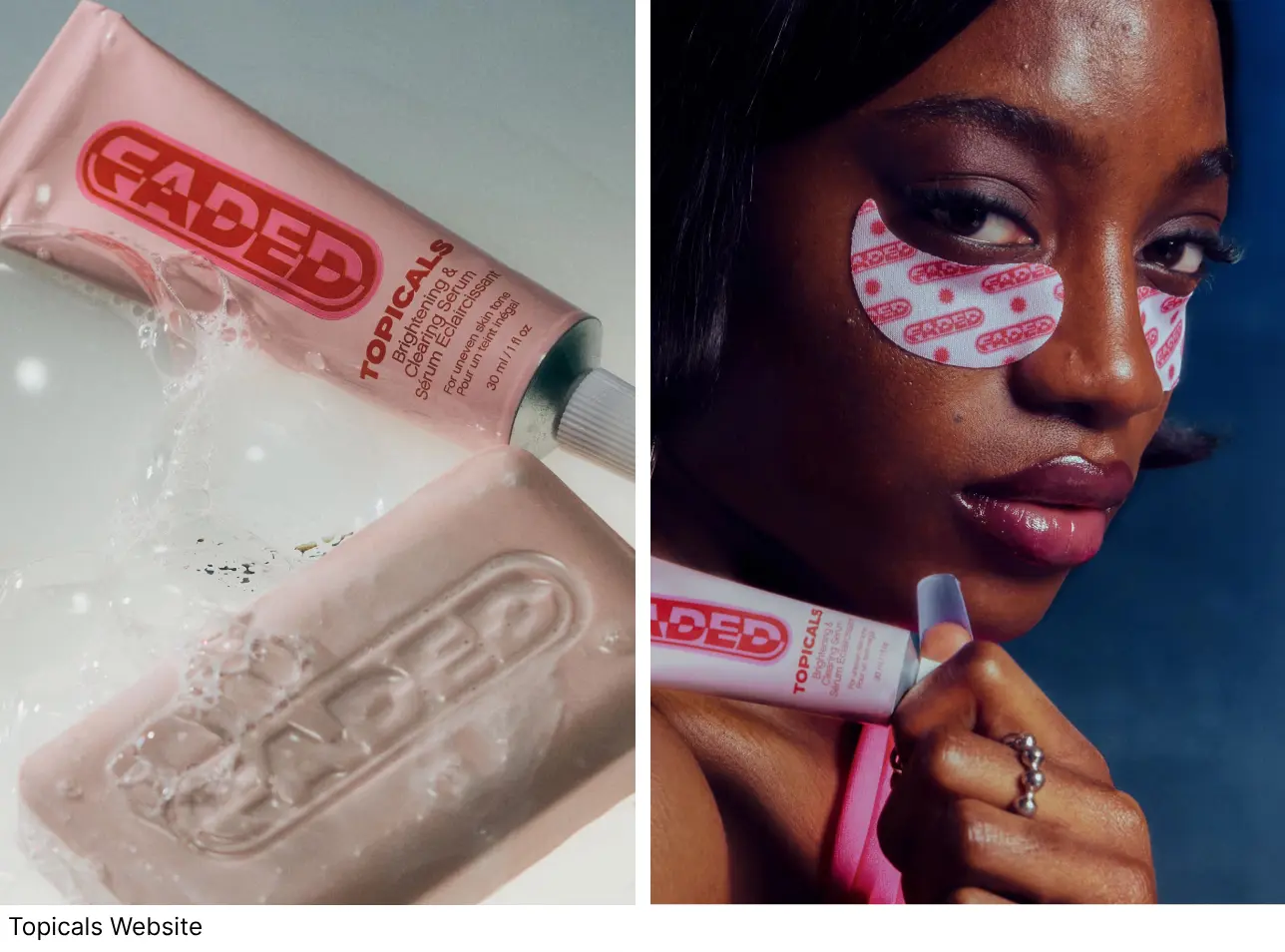
Faded is the hero product, and it's the reason most people find the brand. It targets dark spots, post-breakout marks, and general discoloration using tranexamic acid, niacinamide, azelaic acid, kojic acid, and arbutin. That's a genuinely smart stack. Tranexamic acid and kojic acid interrupt pigment production, azelaic acid works on both pigmentation and irritation, and niacinamide supports the barrier while all of that happens.
One thing almost every review online gets muddled: there are two versions of Faded, and the difference matters more than it sounds.
Faded Brightening + Clearing Serum ($28, 30ml) is the newer, completely odorless one. This is the one I'd buy.
Faded Serum, original formula ($26) is the one with the sulfur smell people write essays about. Topicals doesn't dodge it, either. Their own product page asks, "Want a Faded with no funk?" Reviewers on Thingtesting have compared it to rotten eggs and to Nair. If you've been scared off Faded by the smell reviews, they were almost certainly about this version.
On results timelines, I'd rather point you at people who documented theirs. NBC Select's Bianca Alvarez tested Faded for eight weeks on years-old dark scars on her thigh. She noticed a slight change around week three, and by the end the scars had gone from deep brown-maroon to a few shades darker than her natural tone. Lighter, not erased. PureWow's reviewer saw small spots move within two weeks while larger patches needed considerably longer.
Topicals says a two-week study found 92.31% of participants saw reduced dark-spot visibility and 94.87% saw smoother texture. Those are the brand's own numbers, and the oddly precise decimals are a tell: they work out to roughly 36 and 37 people out of a 39-person panel. A small panel isn't a scandal, it just isn't the same thing as a clinical trial. Treat it as encouraging rather than conclusive.
[box-b: like-butter-moisturizer]
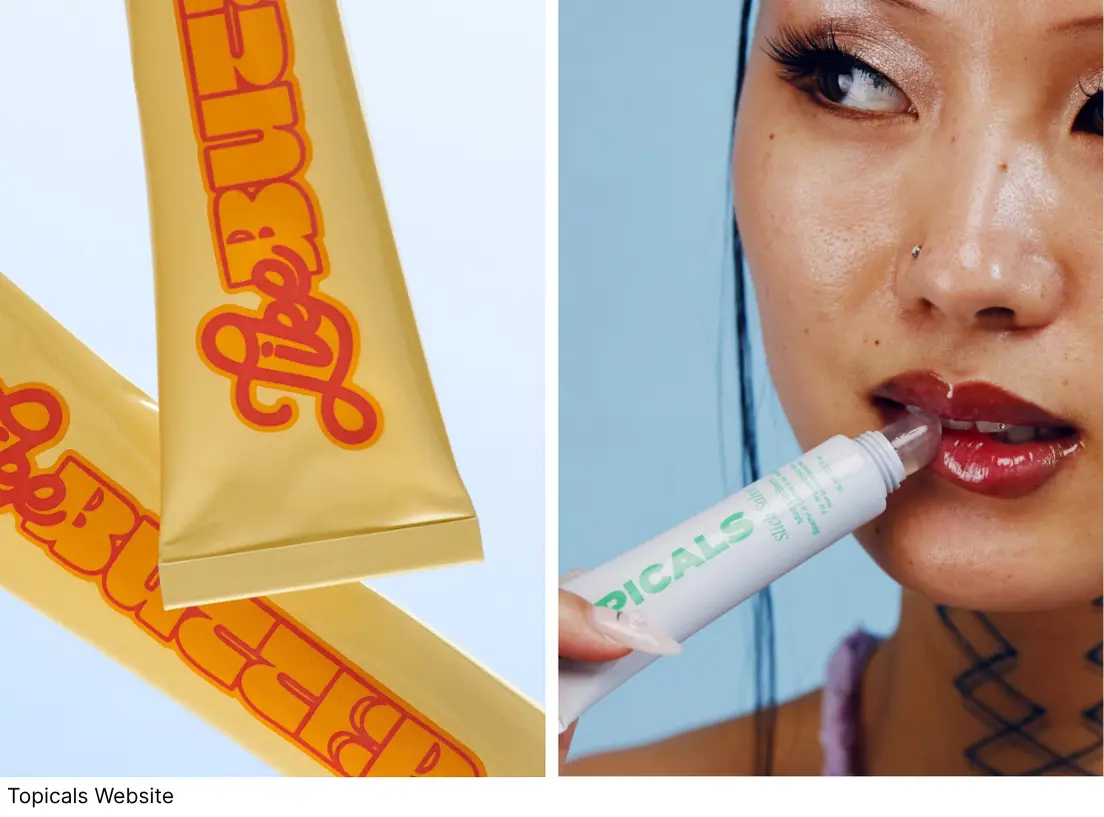
If Faded is the brand’s famous product, Like Butter Moisturizer ($34, 50ml) is the one I'd hand to a friend mid-flare.
It's built on 1% colloidal oatmeal—the ingredient with real evidence behind it for eczema-prone skin— plus madecassoside, turmeric, Chinese rhubarb root, and green tea. It's vegan, steroid-free, and dermatologist-tested. The texture is thick in the jar and then goes soft and slippy on contact, more balm than cream.
It carries a 4.9-star average on the brand's site, and the review language is remarkably consistent. One customer's line stuck with me: "my face has COMPLETELY calmed down." That's the way people write about this product. Relief, not glow.
I liked it, and it's the Topicals product I've repurchased without thinking about it.
Does Topicals actually work on hyperpigmentation?
Yes, gradually, and only if you're consistent and wearing sunscreen. That's the honest short answer.
The actives in Faded are the same ones dermatologists reach for on discoloration, so the formula isn't hype. What varies is everything around it. As board-certified dermatologist Dr. Brooke Jeffy, founder of BTWN, told NBC Select: "Effectiveness will depend on the ingredients in a product's formula as well as its concentration and how consistently you use it."
The other half is sun protection. Dr. Miriam Hanson, a board-certified dermatologist at Westlake Dermatology, recommends pairing any brightening serum with strict daily SPF, and that advice does most of the heavy lifting here. UV exposure actively drives the pigment you're paying to fade. Skipping sunscreen while using Faded is close to pointless.
Realistic expectation: small, newer marks improving in three to four weeks. Older or deeper discoloration in two to three months, with improvement rather than erasure. If you have melasma, or spots you can't confidently identify, see a dermatologist before you self-treat.
The rest of the lineup worth knowing about
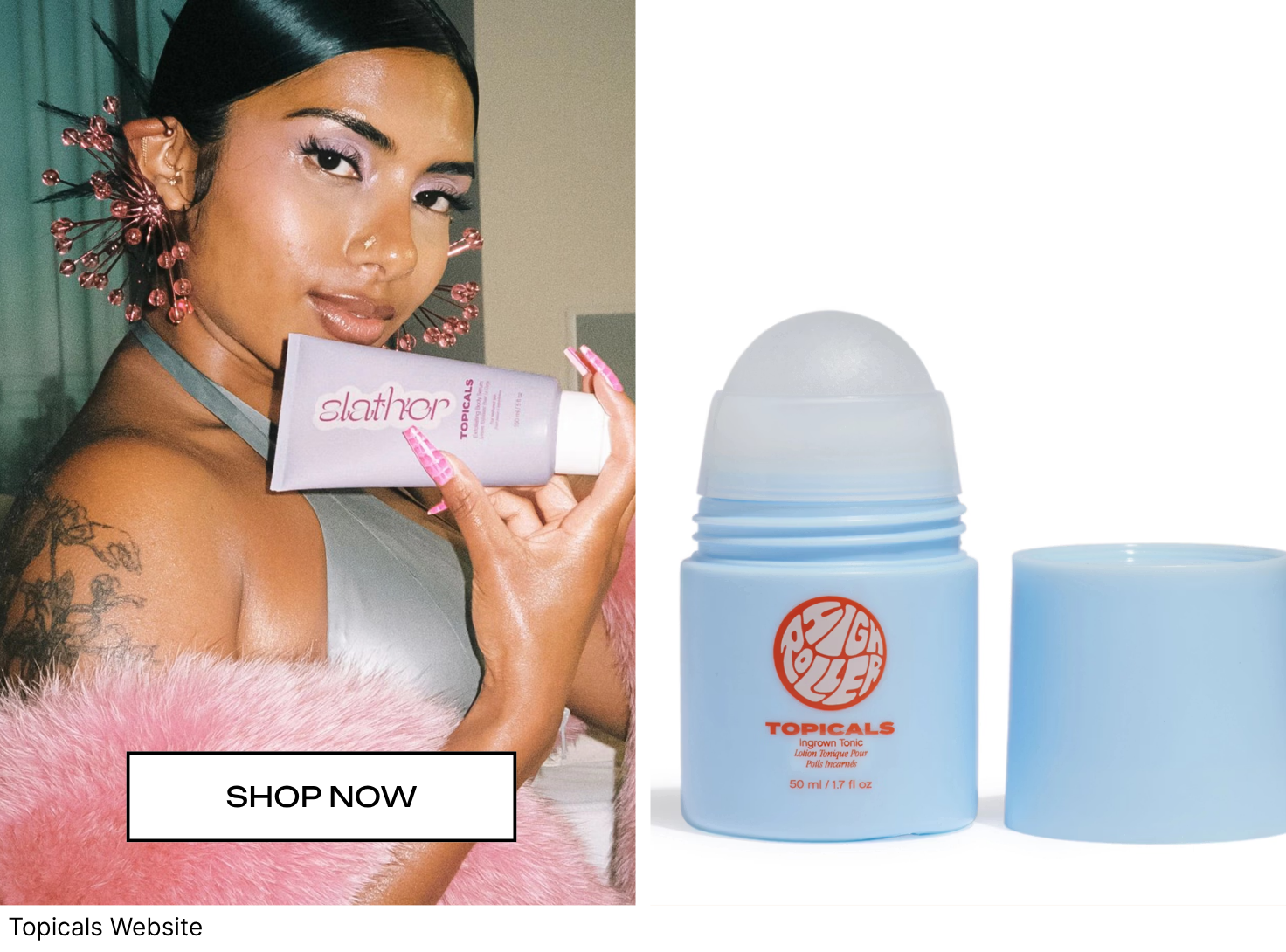
High Roller Ingrown Tonic ($26, 50ml) is a glycolic and salicylic roll-on for razor bumps and ingrowns on underarms and bikini line, with niacinamide and zinc PCA for the discoloration and redness they leave behind. If bumpy skin is your main thing, it pairs well with the picks in our Soft Services review. It also has 4.9 stars—one of the most-loved products in the range.
Slather Exfoliating Body Serum ($30, 150ml) uses encapsulated retinol, lactic acid, and urea on keratosis pilaris and strawberry-skin texture. Overnight body treatment, no scrubbing.
Clearly Acne Mist and Clearly Blemish Mask ($26 each) cover active breakouts with a calming rather than stripping approach. Worth reading alongside our tbh Skincare piece if acne is the main event.
Faded Under Eye Masks ($22) get consistent praise for staying put, which is a low bar the category keeps failing.
Slick Salve ($16) is a good lip balm. Some reviewers find it sticky.

We write about products we've actually bought and used. Faded and Like Butter have both been in my routine, and this piece reflects that. For results claims we can't verify ourselves, like multi-month fading timelines, we cite named published tests and dermatologists rather than guessing, and we label brand-run studies as brand-run. We aren't paid by Topicals and there's no sponsorship behind this article. When a product has a real flaw, like the smell of the original Faded, we say so.
Your flare-up was never the problem. The products that treated it like one were.